
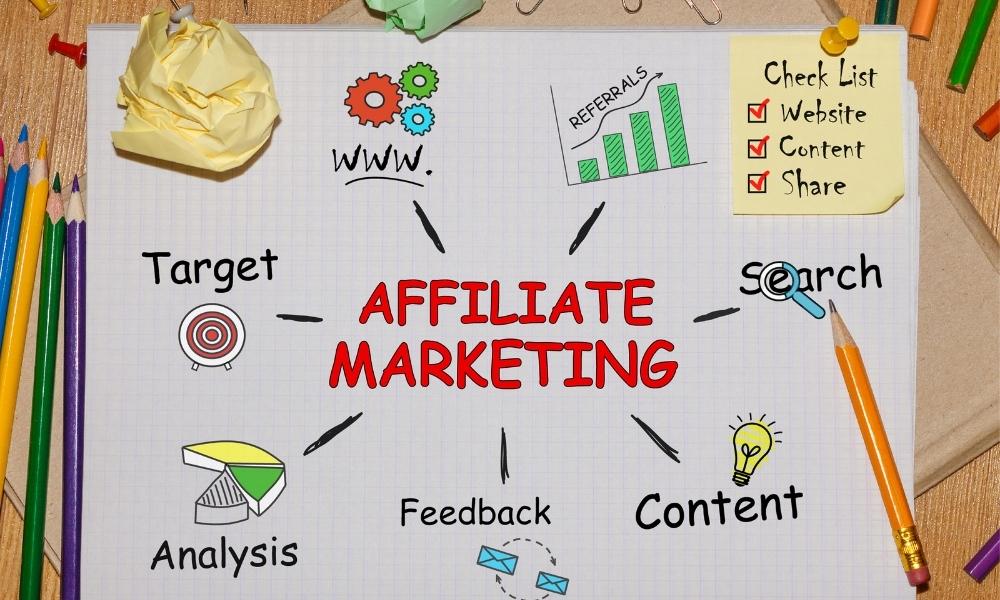
When I first learned about affiliate marketing, I thought the hardest part would be joining affiliate programs.
But honestly, that was not the real hard part.
The confusing part was figuring out which tools I actually needed.
Everywhere I looked, someone was recommending a new platform, a new tracker, a new SEO tool, a new email tool, a new link plugin, a new automation app, and suddenly, affiliate marketing started to feel expensive before I even made my first commission.
And as a beginner blogger, that is the last thing I wanted.
I wanted to make the most progress with the lowest cost, the least overwhelm, and the fewest tools possible.
So in this guide, I want to share the affiliate marketing tools I would actually consider as a beginner blogger — not a huge complicated list, but a practical stack that helps you write better content, manage links, track clicks, build trust, and grow your income slowly and realistically.
If you are still planning how affiliate income fits into your blog, my guide on how to monetize your blog from day one is a good place to connect the bigger strategy with the tools below.
What Are Affiliate Marketing Tools?
Affiliate marketing tools are the apps, plugins, platforms, and systems that help you promote affiliate products more professionally.
They can help you:
- Find affiliate programs
- Create better content
- Manage affiliate links
- Track clicks and conversions
- Create graphics and pins
- Build an email list
- Improve SEO
- Disclose affiliate relationships clearly
- Save time with automation
But here is the important part: you do not need every tool on day one.
That is where many beginners get stuck. They think they need a professional affiliate setup before they can start.
You do not.
You need a simple system that helps you publish helpful content, place your affiliate links properly, track what is working, and build trust with your readers.
My Simple Affiliate Marketing Tool Stack for Beginners
If I were starting again, I would divide affiliate marketing tools into seven categories:
- Affiliate networks
- Link management tools
- SEO and keyword tools
- Content writing tools
- Email marketing tools
- Design and promotion tools
- Analytics and tracking tools
This makes everything feel much easier.
Instead of asking, “What are the best affiliate marketing tools?” I would ask, “What problem am I trying to solve right now?”
Because the best tool is not the most expensive one.
It is the one that removes the biggest bottleneck in your workflow.
1. Affiliate Networks: Tools to Find Products to Promote
Before you can promote anything, you need to join affiliate programs.
Affiliate networks help bloggers find brands, products, and services that offer commissions when someone buys through your link.
Some popular affiliate networks and platforms include Awin, ShareASale, Impact, PartnerStack, CJ, and Amazon Associates.
For beginner bloggers, I would not join every network at once.
I would start with the networks that match my niche.
For example, if you blog about software, AI tools, productivity, or online business, platforms like PartnerStack and Impact may be useful. If you blog about lifestyle, products, home, beauty, or shopping, Amazon Associates, Awin, or ShareASale may be easier to explore.
The goal is not to collect affiliate dashboards.
The goal is to promote products that genuinely fit your readers.
This is especially important if your blog is still new. You need trust more than you need 50 affiliate links.
2. Link Management Tools: Keep Your Affiliate Links Organized
One of the first things I wish I had understood earlier is this: affiliate links can become messy very quickly.
You may start with only two or three links.
Then suddenly you have links in blog posts, Pinterest descriptions, YouTube descriptions, comparison tables, email newsletters, and resource pages.
That is why link management tools are helpful.
For WordPress bloggers, tools like ThirstyAffiliates and Pretty Links can help you organize, cloak, categorize, and manage affiliate links from your WordPress dashboard.
This can save time later when a brand changes its affiliate link or a program moves to another network.
Instead of editing 30 blog posts manually, you update the link once inside your link management tool.
That is the kind of small system that saves future headaches.
If your blog is built on WordPress and you are trying to make your workflow easier, my article on WordPress automation can also help you think about small ways to save time on your site.
3. SEO Tools: Find Affiliate Keywords People Actually Search For

Affiliate marketing works better when you create content people are already searching for.
This is where SEO tools matter.
You do not want to write only random product posts and hope someone finds them.
You want to target keywords with buying intent, comparison intent, or problem-solving intent.
For example:
- Best email marketing tool for bloggers
- Canva vs Adobe Express
- Best AI writing tools for bloggers
- Pictory vs Lumen5
- Best Pinterest scheduling tools
- ConvertKit alternatives
- Best tools for beginner bloggers
These keywords are useful because the reader is not just browsing. They are trying to decide.
Tools like Ahrefs, Semrush, Ubersuggest, and Google Keyword Planner can help you research keywords, competitors, search volume, and content opportunities.
As a beginner, I would not immediately pay for every SEO tool.
I would start with a simple process:
- Use Google autocomplete
- Check People Also Ask questions
- Look at competitor article titles
- Use one keyword tool if your budget allows
- Focus on long-tail keywords
If you already write about AI and blogging, my guides on the best AI SEO tools and the best AI writing tools can become strong affiliate-style content because readers are often comparing tools before they buy.
4. Content Writing Tools: Create Better Affiliate Content Faster
Affiliate marketing is not just about adding links.
The content has to be helpful.
If your article feels like one long sales pitch, readers can feel it.
The best affiliate content usually helps someone make a decision.
That can be through:
- Honest reviews
- Comparison posts
- Beginner tutorials
- Use-case examples
- Pros and cons
- Mistakes to avoid
- Personal experience
- Step-by-step guides
AI writing tools can help you outline, brainstorm, simplify, and organize affiliate content faster.
You can use ChatGPT, Gemini, or Claude to create outlines, write comparison tables, generate FAQ ideas, and turn messy notes into structured blog sections.
But I would not use AI to fake experience.
That is a big mistake.
If you have not used a tool, say that you are comparing features, pricing, use cases, or public information. If you have used it, share what actually happened.
That honest tone is what makes affiliate content feel trustworthy.
For example, if you are writing tool-based affiliate articles, my guide on ChatGPT prompts for blog posts can help you create better outlines, intros, FAQs, and comparison sections without making the article sound robotic.
5. Email Marketing Tools: Do Not Depend Only on Blog Traffic
One thing I wish every beginner blogger understood earlier is this: not everyone buys the first time they read your post.
Sometimes they need to trust you first.
That is why email marketing is so useful for affiliate marketing.
You can create a simple lead magnet, collect email subscribers, and later share helpful content, tutorials, product recommendations, and seasonal offers.
Tools like Kit, MailerLite, Brevo, and AWeber can help you build an email list and send newsletters.
For affiliate marketing, email can be powerful because it lets you build a relationship instead of relying only on search traffic.
For example, instead of only writing a blog post called “Best AI Tools for Bloggers,” you can also create a free checklist like:
My 10 Favorite AI Tools for Beginner Bloggers
Then you can send subscribers a simple email sequence explaining how to use those tools.
That is more useful than just dropping links randomly.
If you need ideas for freebies that can grow your list, my article on lead magnet ideas can help you choose something simple and beginner-friendly.
6. Design Tools: Create Pins, Graphics, and Visuals That Get Clicks
Affiliate content needs promotion.
You can write the best review in the world, but if nobody clicks it, it will not help you much.
This is where design tools matter.
Canva is one of my favorite beginner tools because it can help you create Pinterest pins, blog graphics, comparison graphics, YouTube thumbnails, Instagram posts, and simple videos in one place.
For affiliate bloggers, Canva is useful because you can create:
- Product comparison pins
- Checklist graphics
- Blog post banners
- YouTube thumbnails
- Instagram carousels
- Lead magnet covers
- Simple product tutorial visuals
If Pinterest is part of your traffic strategy, your visuals matter a lot.
You can write a review post, then create several Pinterest pins pointing back to it. You can also create video pins or idea-style content if that fits your niche.
This is why I like connecting affiliate marketing with Pinterest. My guides on Pinterest SEO, Pinterest marketing strategy, and Pinterest affiliate marketing can all support an affiliate content system.
7. Analytics Tools: Track What Is Actually Working
Affiliate marketing becomes much easier when you stop guessing.
You need to know:
- Which blog posts get traffic
- Which links get clicks
- Which pages convert best
- Which pins bring visitors
- Which emails get clicks
- Which products do people care about
For website analytics, Google Analytics and Google Search Console are important free tools.
Google Search Console can show which search queries bring people to your site. Google Analytics can help you understand traffic sources, top pages, engagement, and user behavior.
Inside your affiliate dashboards, you can also check clicks, sales, conversion rates, and commissions.
The key is to review your numbers regularly without obsessing over them every hour.
For example, once a month, you can check:
- Top 10 affiliate blog posts
- Top 10 search queries
- Affiliate links with the most clicks
- Posts that get traffic but no clicks
- Products that convert best
- Old posts that need updating
This turns affiliate marketing from guessing into improving.
8. Automation Tools: Save Time Without Making Things Complicated
Automation sounds fancy, but it does not have to be complicated.
For beginner affiliate bloggers, automation can be as simple as:
- Saving new leads to an email list
- Sending a welcome email
- Creating content reminders
- Tracking affiliate content ideas
- Sending form responses to a spreadsheet
- Notifying you when a task is due
Tools like Zapier, n8n, and Make can help connect different apps.
But I would keep this simple at the beginning.
Automation should save time, not become another full-time project.
If you are curious about practical workflows, my articles on Zapier AI workflows, Zapier free alternatives, and Zapier vs n8n can help you compare options without overcomplicating things.
9. Disclosure Tools and Pages: Build Trust From the Beginning
This part is not exciting, but it is important.
If you use affiliate links, you should disclose that clearly.
Do not hide it.
Do not make readers guess.
A simple disclosure can say something like:
This post may contain affiliate links. If you buy through my links, I may earn a commission at no extra cost to you. I only recommend tools I believe are useful for my readers.
You can place a disclosure near the beginning of affiliate posts and also create a full affiliate disclosure page on your website.
The FTC Disclosures 101 for Social Media Influencers page is a useful resource for understanding why clear disclosures matter when you recommend products or work with brands.
Even if your audience is small, trust matters.
Affiliate marketing should feel like helping readers make better decisions, not hiding commissions.
10. Content Planning Tools: Stay Consistent Without Burning Out
Affiliate marketing works better when you publish consistently.
But consistency does not mean publishing every day until you burn out.
It means having a simple content plan.
You can use Notion, Trello, Airtable, or even Google Sheets to organize your affiliate content ideas.
A simple tracker can include:
- Article title
- Main keyword
- Affiliate program
- Product link
- Disclosure added
- Internal links added
- Pins created
- Email sent
- Last updated date
- Performance notes
This is one of those boring systems that quietly helps you make more progress.
You do not need a perfect dashboard.
You need a place where your ideas do not disappear.
Best Affiliate Marketing Tools for Beginners: My Simple Recommendation
If I were starting affiliate marketing from zero, I would not buy every tool immediately.
I would start with this simple stack:
- Affiliate network: Awin, ShareASale, Impact, PartnerStack, or Amazon Associates
- Link management: Pretty Links or ThirstyAffiliates
- SEO research: Google Search, Google Search Console, and one affordable keyword tool if needed
- Writing support: ChatGPT or another AI writing assistant
- Email marketing: Kit, MailerLite, Brevo, or AWeber
- Design: Canva
- Analytics: Google Analytics and Search Console
- Planning: Notion, Trello, Airtable, or Google Sheets
That is enough to start.
You can always upgrade later when you know what is actually working.
Affiliate Marketing Tool Mistakes to Avoid
Buying too many tools too early
This is the biggest mistake.
Tools can help, but they do not replace content, trust, and traffic.
Before paying for another subscription, ask yourself:
Will this tool help me publish better content, get more traffic, track results, or save real time?
If the answer is no, skip it for now.
Promoting products that do not fit your audience
Just because a program pays a high commission does not mean it belongs on your blog.
If your readers are beginner bloggers on a budget, recommending expensive tools without context may hurt trust.
Explain who the tool is for, who should skip it, and whether there is a free or cheaper alternative.
Ignoring internal links
Internal links help readers move through your site and discover related content.
For example, an affiliate post about AI writing tools can naturally connect to your articles on AI blog writing, how to humanize AI content, and ChatGPT alternatives for content creators.
This helps readers get more value and helps your site structure feel stronger.
Not updating old affiliate posts
Affiliate content can become outdated quickly.
Prices change. Features change. Free plans change. Programs close. Tools rebrand.
So every few months, review your top affiliate posts and update them.
This can improve trust and performance.
Final Thoughts: Start With Simple Affiliate Marketing Tools
Affiliate marketing does not have to start with a huge, expensive toolkit.
You do not need every plugin, every tracker, every SEO platform, and every automation tool on day one.
You need a simple system that helps you:
- Find good products
- Create helpful content
- Manage your links
- Promote your posts
- Track your results
- Build trust with your audience
That is enough to begin.
My honest advice is to start small.
Choose one affiliate network, one link management tool, one design tool, one email tool, and one simple tracker.
Then focus on publishing useful content that helps your readers make better decisions.
The tools are there to support the business.
They are not the business.
And that is the affiliate marketing lesson I wish I had understood earlier: the smartest stack is not the biggest stack. It is the one you can actually use consistently without draining your time, money, or energy.